
By Precious Akutamadu
The Federal Government has concluded the first phase of mandatory foundational training for 350 procurement officers to strengthen professionalism, accountability and transparency in public procurement.
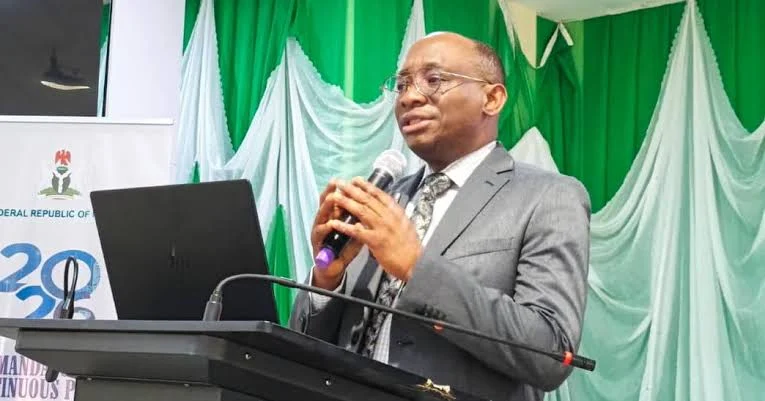
Dr Adebowale Adedokun, Director-General of the Bureau of Public Procurement (BPP), disclosed this at the closing ceremony of the three-week training programme on Saturday.
The News Agency of Nigeria (NAN) reports that the event was held at the Petroleum Technology Development Fund Centre for Skills Development and Training in Port Harcourt.
Adedokun said the programme was designed to equip officers from federal ministries, departments and agencies, as well as some state institutions, with basic procurement knowledge before proceeding to advanced courses.
He charged the officers to uphold integrity, resist corruption and protect public resources.
He stressed the need for them to advise political leaders and senior government officials on appropriate procurement procedures.
Adedokun said participants would sit examinations to assess their understanding of procurement principles.
He added that successful candidates would receive certificates, while those who failed would be given two additional attempts before being redeployed from the procurement cadre.
He said the Federal Government was institutionalising professional procurement education, with recruits required to complete the foundational programme before practising.
He added that universities had been directed to introduce degree programmes in sustainable procurement, with the first graduates expected within three years.
Adedokun said the reforms included a Nigerian First policy aimed at encouraging government agencies to patronise quality locally manufactured goods and services.
He said these included vehicles, textiles, information technology equipment, solar products and medical devices.
According to him, the initiative is expected to promote local production and create employment opportunities.
He said the government had also introduced a debarment policy to sanction contractors and service providers whose failure to fulfil contractual obligations resulted in financial losses.
Adedokun added that electronic procurement would enable contractors to participate in bidding remotely.
He said community-based procurement would also create opportunities for local contractors to execute contracts valued between N2 million and N10 million.
He said the bureau had introduced a 14-day standstill period after bid evaluation to allow unsuccessful bidders to raise objections before contracts were awarded.
Adedokun also disclosed that the government-funded SPACI online training platform would offer free procurement training for its first two years.
He said affirmative procurement measures had been introduced to reserve a percentage of contracts for women-owned businesses, young people, veterans and persons with disabilities.
He stressed that the measures would be implemented without compromising quality standards.
Adedokun added that participants had signed codes of conduct committing them to professionalism, fairness and zero tolerance for fraud.
Meanwhile, Mr Nelson Ujogbo, Head of Training at the BPP and programme coordinator, described the training as demanding but rewarding.
He commended the participants for their commitment to the programme.
Ujogbo, however, identified the application of newly acquired knowledge in the workplace as a major challenge.
He stressed the need for support from senior management and accounting officers to ensure compliance with the Public Procurement Act. (NAN)
About The Author



Comments